
Closing Song and Scene: Beetlejuice (1988)
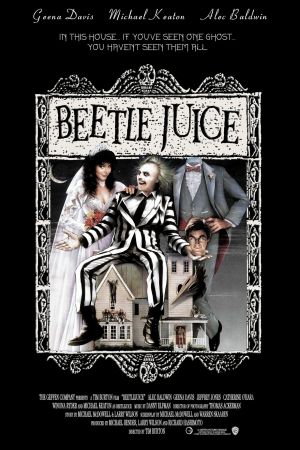
This is my second effort in a series that directly contrasts with another, Opening Titles and Song, which looks at a film’s Closing Song and Scene. This time reviewing the use of said in the 1988 American gothic dark fantasy comedy horror film directed by Tim Burton, Beetlejuice. Again, a film that showcased the tendencies of the filmmaker, along with their use of needle-dropping popular music into their work to add another level of depth and emotion.
*** spoilers ahead ***
This film isn’t the first to take a needle-dropped song to help cap off a strong closing scene. Far from it, and I’ve already highlighted some of them in this blog1. Though movies are primarily a visual art form, it’s a recognized standby of filmmakers to use a well-placed song to deepen their picture’s impact by adding other levels of emotion — the audience’s and the music’s — with those on the screen. If matched up perfectly, those moments can and do further the film’s vision and weight.
Even though I was introduced to the work of Tim Burton by way of his earlier film, Pee Wee’s Big Adventure (1985), it was Beetlejuice where his macabre and inane sensibilities found a home in my future viewing habits. Happened the same time as my “lost decade” ended, which commenced in 1978, and ended after I started dating the woman who’d be my future bride. Perhaps, the reason the film’s key themes of death, possession, and limbo2, registered with me after viewing it with her.
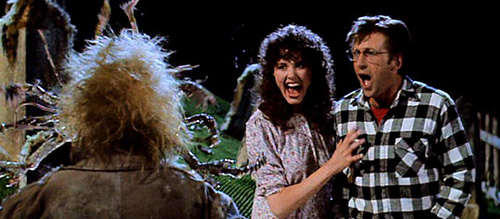
Burton’s dark comedy, that’s surprisingly quick on its feet, is equally deft in bringing to light the anxieties of what’s to come for all of us when we die. It’s also a wonderfully strange piece of social commentary about capitalism and the ’80s. All care of its plot that follows Adam (Alec Baldwin) and Barbara (Geena Davis), a couple who were attempting to deal with a lost pregnancy by isolating themselves and working on their Vermont home, when they perish via a tragically accidental death.
The aftermath of which drives the zany, surreal story through the corridors some of us hope exist in an afterworld.
[in the waiting room of the afterlife]
Barbara: “Adam, is this what happens when you die?”
Receptionist: “This is what happens when *you* die.”
[points at a gaunt man smoking]
Receptionist: “That is what happens when *he* dies.”
[points at a woman cut in half on the sofa reading]
Receptionist: “And that is what happens when *they* die. It’s all very personal. And I’ll tell you something: if I knew then what I know now…”
[shows her slit wrists]
Receptionist: “…I wouldn’t have had my little accident.”
[the dead people laugh]
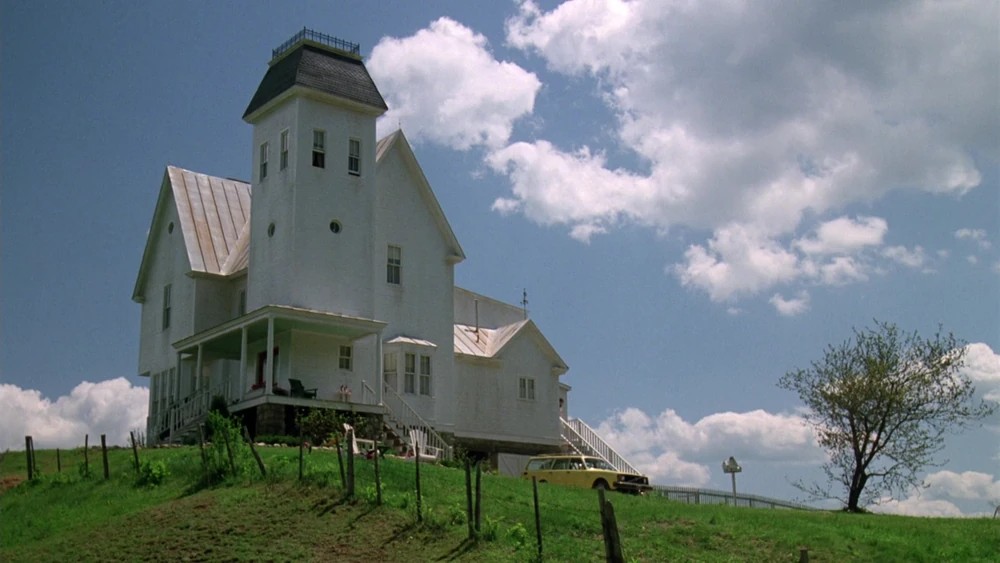
The reverse haunting comes about due to the annoyingly monied yuppies who buy the couple’s cherished home, and end up the problem for the recently deceased. Through trial and repeated failure, Adam and Barbara desperately and unwisely turn to the lecherous and inimical “bio-exorcist”, Betelgeuse (Michael Keaton), to scare the Deetzes and their daughter Lydia away, so that they in ghostly form can live in peace. As one would expect, a move both the living and the dead come to regret.
The film pitches opposites against each other throughout to reach a mutual understanding by the film’s conclusion, hinging on whether the well-off living can get along with the lifeless with nothing left, and the departed arguing for life with those who think there’s nothing to live for.
Juno: “What’s wrong?”
Barbara: “We’re very unhappy.”
Juno: “What did you expect? You’re dead!”
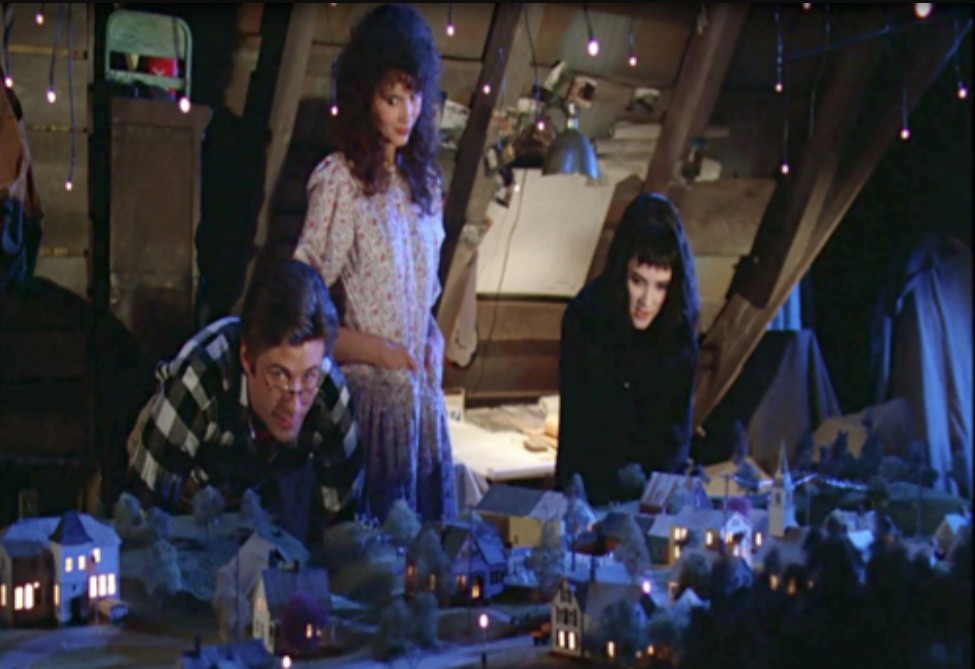
Though it must be recognized that Beetlejuice‘s flippant comedy pulled off the matter of what’s at death’s door without the tricky involvement of people’s beliefs, deities, or religion during a conservative time period. Its underrated blend of humanity and blackly humorous entertainment made it so. While Keaton got to chew the scenery something fierce, in a film titled for his character3, his was not the most meaningful relationship. Turns out, it was between those not even related.
And by that, it is the women who drive the story, and all done whilst whistling past the graveyard.
Likewise, the film became more weighty once the one character who could actually see Adam and Barbara, the Deetz’s goth child, Lydia (Winona Ryder), showed up. Causing the recently deceased Barbara, who tried and never got a chance at motherhood, to embrace the wayward daughter with a romanticized appreciation of death and gloom. Ultimately, fixing the problems of both families now living and haunting this neck of eccentric Vermont.
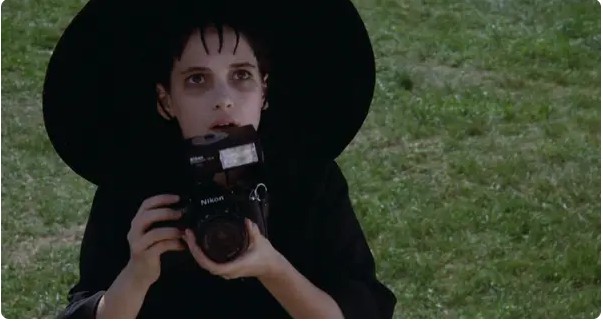
Lydia’s envy of the dead and detachment from her dad and stepmother Delia, likely tied to the anguish felt for a mother no longer around4.
Indeed, with Burton satirizing the decade’s compunction for intense individualism, immodesty, and free market financial superiority, Lydia’s neglect by her own parents can be seen as Gen X’s outcome to the time. Barbara’s need to protect her from the hereafter, and especially from Beetlejuice, elevates the film with its most elemental response to that threat. In the process, it provided the filmmaker with his most optimistic outlook to that point, and the reason the film landed with me back then.
Well, that and the music needle-dropped throughout the film; we have the late Catherine O’Hara to thank for that memorable aspect of the film.
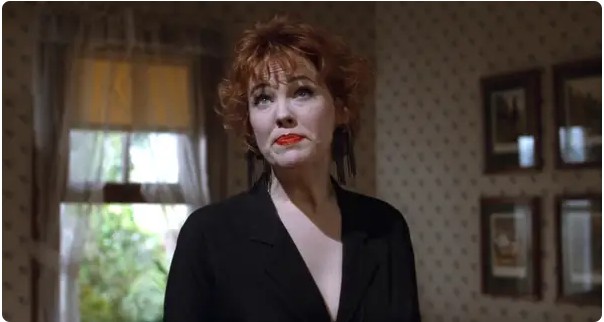
The one and only Canadian actress, writer and comedian, who made Delia standout, suggested using Calypso music for the iconic dinner party scene. The script had called for R&B music to be used, but O’Hara felt Calypso would give the possessed dance sequence a more eccentric energy. The director loved the suggestion and personally chose the four specific Harry Belafonte songs to be used, securing the rights to all of them5, including the song from 1961 that closes it.
Couldn’t do much better than to employ Jump in the Line (Shake, Señora) to highlight life’s treats while they last. Originally composed by Trinidadian calypso artist Lord Kitchener and later covered by Belafonte, the inaugural song focused on social unity and community during carnival. When the American singer/actor recorded his rendition, the focus shifted toward a playfully infectious high-energy interaction. Encouraging his listeners to join in dance, and staged here as you’d only expect by Burton.
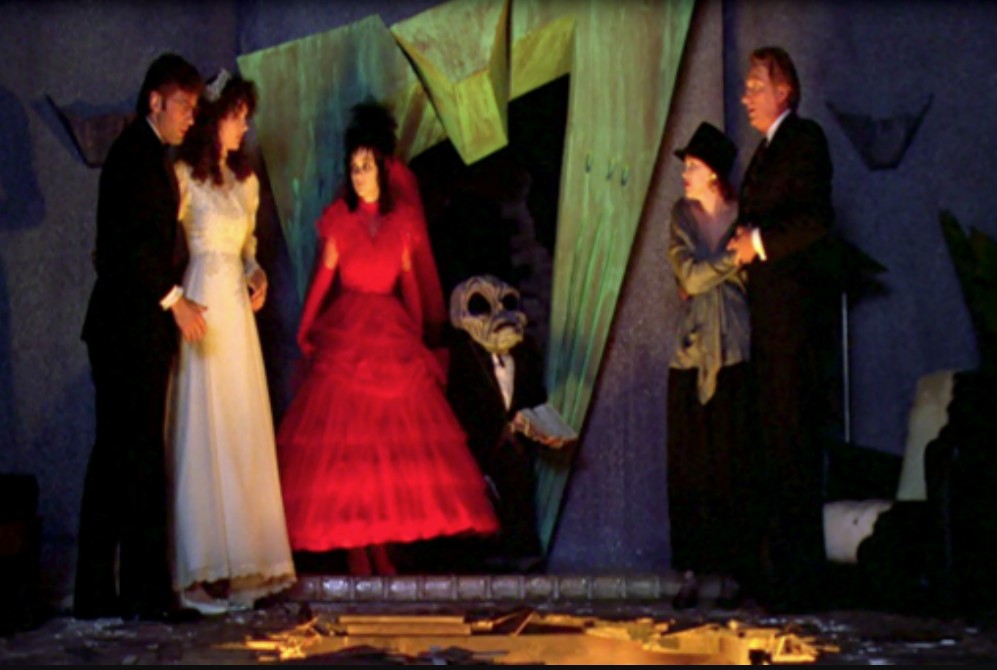
And it’s this song, byway of her husband’s appreciation of the artist’s music6, that emphasizes the change Barbara imparted to her pseudo-daughter’s outlook on life by film’s end. Gone is Lydia’s sorrowfulness — the “My whole life is a dark room. One…big…dark room.” — and now with a willingness to joyfully share her day-to-day school results with those closest to her. And for any parent, real or ghostly, when that happens with your teenager7, a celebration is called for.
And with Lydia finally happy, there’s no better way to end this film and post, and look forward to the time left and whatever the afterlife has in store for us — so Happy Halloween, everyone.
Shake, shake, shake, Senora, shake your body line
Shake, shake, shake, Senora, shake it all the time
Work, work, work, Senora, work your body line
Work, work, work, Senora, work it all the time

My girl's name is Senora
I tell you friends, I adore her
And when she dances, oh, brother
She's a hurricane in all kinds of weather

Jump in the line, rock your body in time
(Okay, I believe you)
Jump in the line, rock your body in time
(Okay, I believe you)
Jump in the line, rock your body in time
(Okay, I believe you)
Jump in the line, rock your body in time
(Whoa)

Shake, shake, shake, Senora, shake your body line, whoa
Shake, shake, shake, Senora, shake it all the time
Work, work, work, Senora, work your body line
Work, work, work, Senora, work it all the time

You can talk about cha-cha
Tango, waltz or the rumba
Senora's dance has no title
You jump in the saddle
Hold on to the bridle

Jump in the line, rock your body in time
(Okay, I believe you)
Jump in the line, rock your body in time
(Rock your body, child)
Jump in the line, rock your body in time
(Somebody, help me)
Jump in the line, rock your body in time
(Whoa)

Shake, shake, shake, Senora, shake your body line
Shake, shake, shake, Senora, shake it all the time, whoa
Work, work, work, Senora, work your body line, yep
Work, work, work, Senora, work it all the time

Senora, she's a sensation
The reason for aviation
And fellas, you got to watch it
When she wind up she bottom, she go like a rocket

Jump in the line, rock your body in time
(Okay, I believe you)
Jump in the line, rock your body in time
(Hoist those skirts a little higher)
Jump in the line, rock your body in time
(Up the chimney)
Jump in the line, rock your body in time
(Whoa-oh)

Yes sir

Shake, shake, shake, Senora
Shake your body line
Work, work, work, Senora
Work it all the time
Dance, dance, dance, Senora
Dance it all the time
Work, work, work, Senora
Work it all the time

Senora dances calypso
Left to right is the tempo
And when she gets the sensation
She go up in the air
Come down in slow motion

Jump in the line, rock your body in time
(Okay, I believe you)
Jump in the line, rock your body in time
(Somebody, help me)
Jump in the line, rock your body in time
(Okay, I believe you)
Jump in the line, rock your body in time
(Whoa)

Shake, shake, shake, Senora, shake your body line
Shake, shake, shake, Senora, shake it all the time
Work, work, work, Senora
- As noted on this blog post and this one. ↩
- Along with Gentrification. ↩
- Michael Keaton came up with much of the character’s look himself. Keaton told the makeup department he wanted mold on his face and his hair looking as if he’d stuck his finger in an electric socket, and he requested that the wardrobe department send him clothes from all different time periods. ↩
- I could relate. ↩
- Four of Calypso artist Harry Belafonte’s existing songs are featured in Tim Burton’s 1988 movie Beetlejuice: “Sweetheart from Venezuela”, “Man Smart (Woman Smarter)”, “Day-O (The Banana Boat Song)”, and Jump in the Line (Shake, Senora)”. ↩
- Adam Maitland, during his opening workshop scene, plays Harry Belafonte’s music on a cassette player. ↩
- As a father to both a son and a daughter, I know this only too well. ↩


Are you talkin’ to me?