
Crime 101 (2026)
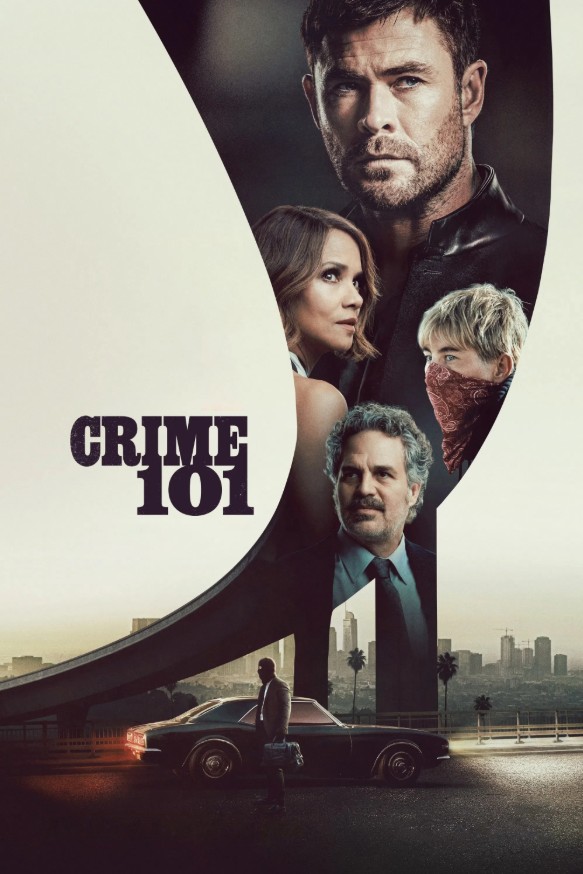
“That’s the thing about walk-away money. You have to be able to actually walk away with it.”
I have to be straight with you: I am a big fan of the author Don Winslow. And I’ve blogged about some of his notable work here and here. Quoting from a Booklist review that applies to any of his work, “With his trademark blend of insight, humanity, humor, action and the highest level of literary craftsmanship…”, this is a no-brainer. So, it would be no surprise that I had so looked forward to the film adaptation of one of my favorite novellas from his Broken novel published in 2020.
And the last time my old duo post partner and I got back together to do one of these book and film reviews, we were in the midst of a pandemic, with all the disease and misery our lives could handle; but given our current state, can’t say we’re much better at the moment1.
“Crime 101: Laws are made to be broken, with rules that are made to be followed.” — Don Winslow
Moviemakers always face a classic conundrum with film adaptations, and as someone who appreciates both the printed word and the moving image, the result is a mixed bag. Follow the novel to the letter — see Rosemary’s Baby — or use the novel as a scaffold to hoist your own ideas onto the screen — The Shining, anyone? So, the readers and fans of the literary work watch with varying degrees of discomfort and bated breath for what materializes on celluloid or in digital form.
Such was my state when I went to the movie theater the weekend Crime 101 opened last February. Not about to miss seeing this after a fresh reread of the novella. That’s why I thought to bring back my former Duo Post partner Rachel to look at the book and film for her thoughts on a subject that needed another perspective. Though our old book-film series closed down years ago, this title seemed a good one to take on at this point. Rachel’s book review can be found here:
A brief synopsis of the film: In Los Angeles, Mike is an elusive and disciplined jewel thief, meticulously planning robberies that avoid violence, any DNA evidence, and law enforcement. With the scores always near U.S. Route 101. His latest a 3 million dollar heist of a diamond delivery, which deftly avoids the planted decoys, but almost takes a bullet as a result. Still shaken, he notifies his longtime fence that he’s calling off a planned robbery in Santa Barbara to let himself and things cool down.
Consequently, setting off a series of actions on both sides of the law for him with those on his periphery. The LAPD detective, Lou Lubesnick, who theorizes the high-value thefts are the work of a lone suspect. A fence who believes Mike has reached his sell-by date, so sets off to take over his racket with Ormon, a violent wannabe hired for the job. And Sharon Colvin, the high-end insurance broker, the one pulled in for Mike’s walk-away score that is to be the culmination of his work as a thief.

“Look, I don’t know if anybody’s ever told you this, but you live a fucked-up life!”
I don’t know if director and writer Bart Layton knew the scariest thing in his film would be what’s in the end credits, “Based on a novella by Don Winslow”. He’d need only ask his counterpart, Oliver Stone, about the difficulty that followed bringing the author’s Savages novel to the big screen2. So, did he stay true to the source, using Winslow’s 60-page story of what it takes to be a high-level thief, and away from jail, along the beautiful coastline between Santa Barbara and San Diego?
Layton, the same guy who brought us the well-received thriller American Animals, restructured the narrative in Winslow’s story while also fleshing out and adding characters to Crime 101. Certainly crafting a backstory for his 140-minute film from a fast-paced novella. An impressive feat that made the type of crime thriller that we don’t see as regularly as I’d like. Okay, maybe a genre that should be tailor-made for the 2020s. Thankfully, the author’s central characters remain intact.
And those characters who stayed in place and elaborated upon on screen did so in different ways. Sidestepping Winslow’s clever dichotomy of using “101”, otherwise known as the Pacific Coast Highway, with the college course numbering system used for an introductory class. Giving lessons on both the PCH and its cool that most on the coast already know, and what it takes to live, work, and survive on either side of what’s legal. So my favorite quote from the novella was nowhere to be seen or heard:
“Crime 101: There’s a word for a man who believes in coincidence: the defendant.”
Still, if I ignore that, does Layton’s labor render an enjoyable adaptation? Grudgingly, I have to say yes. Re-settling the story out of San Diego County’s beautiful beach areas to the more urban grit of my hometown gives the story a darker hue. Perhaps not as inventive as the author on his own home turf, but joining the likes of Michael Mann (with Heat and Collateral), Nicolas Winding Refn (Drive), and Walter Hill (The Driver), who’ve highlighted and lensed this landscape peerlessly in edgy and cinematic ways.
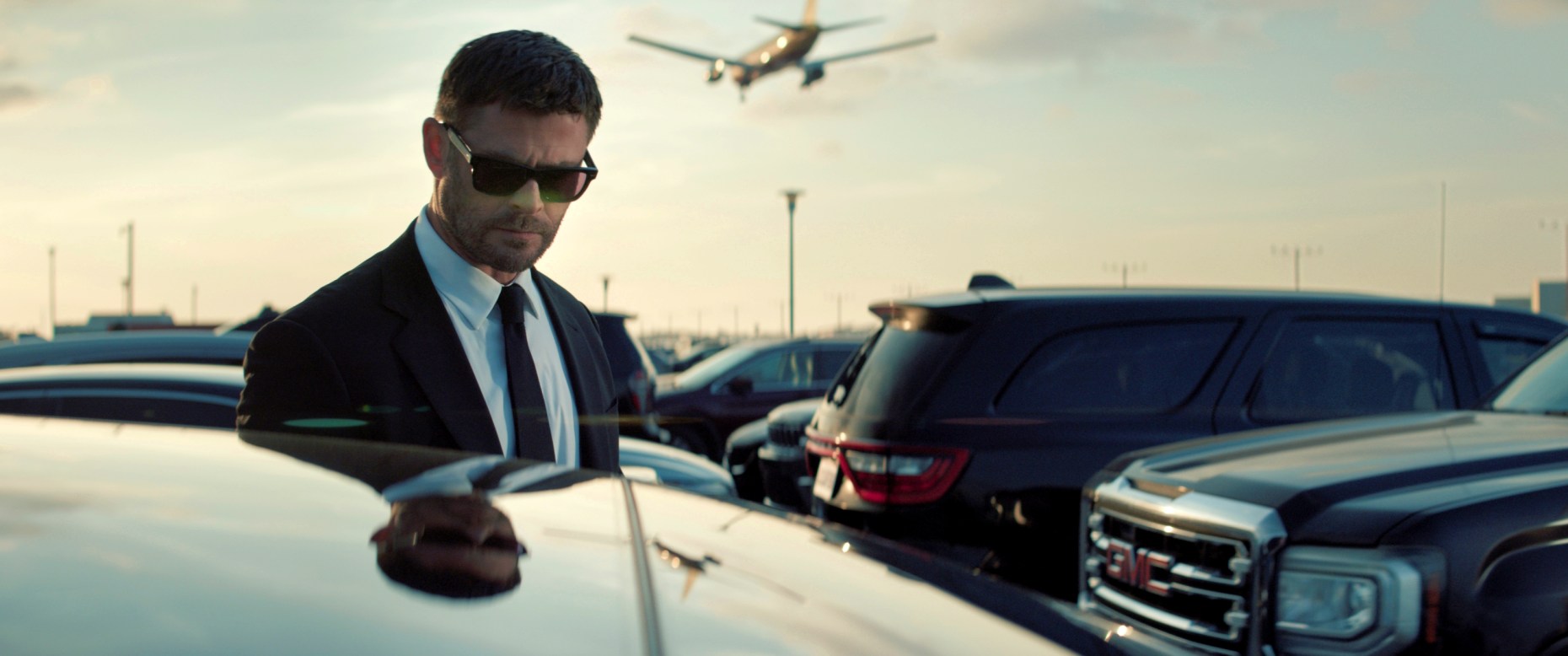
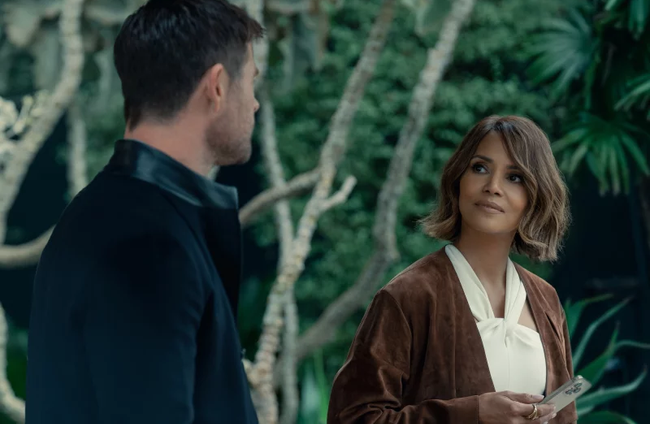
And the star-studded cast helped with that enormously. Of course, it has to be said that the concept casting of actors who’ve previously starred in Marvel’s Cinematic Universe was hard to miss3: Chris Hemsworth (Mike, AKA Thor), Mark Ruffalo (Lou Lubesnick, AKA The Hulk), Halle Berry (Sharon, AKA X-Men’s Storm)4, and Barry Keoghan (Orman, AKA Druig from The Eternals). This could have worked against the film, but ultimately didn’t, as they were just like the rest of us mortals with problems.
Just way better looking, which made the LAPD office politics easier to stomach5.
Add in a Nick Nolte for overchewing the scenery every chance he got, and a Jennifer Jason Leigh you can never have enough of (and who disappeared far too soon in the storyline…thanks, Bart), and you had a talent-laden cast doing fine work. But give Monica Barbaro (and Bart for writing her in) a thumbs up for a character that helps to draw out the stoic Mike. The latter is more inept socially than his literary counterpart, though he too keeps his professional side just as guarded.
Add in notable work from cinematographer Erik Wilson, luminizing L.A. as only it can and should be, and Blanck Mass touching off a fine score with the appropriate needle drops that gave those visuals a melodic and emotional vitality, and this one never lacked anything, technically.
Lastly, why did I qualify my approval of what’s translated to the big screen as grudgingly? Well, for one, it’s Mike’s aforementioned awkwardness outside his work, whereas Winslow’s character was self-assured while being compartmentalized around women and still treating them with agency. Add in Bart’s treatment of Crime 101 to somewhat emulate the fox/hound relationship of De Niro and Pacino from Heat, which may also factor into relocating the story to Los Angeles.
It doesn’t derail my enjoyment of the final product, which may grow over time, much like all of Michael Mann’s work. Both seem to share a keen eye for self-reliant, stoic characters, right along with chronicling their lives and clashes on the flip side of what’s licit. Something that remains a staple of film noir. Just done widescreen and in dazzling scenes that elevate their work with the crime film. And I’ve got to give Bart the credit for seeing what he could turn Winslow’s novella into.
I think my mistake was holding on to the author’s story too tightly. Maybe I’ve re-read it too often instead of accepting the liberty of what another creative mind could do within the tale’s scaffolding6. At least I came around to my son’s point of view, since he accompanied me to the February movie screening. Never “having read the book” (paraphrasing John Lennon), and accepting the director’s finale as what these characters would do in the here and now.
That is to say, it’s no longer 2020, so time to move on.
- Don Winslow is also a longtime critic of our current president, and he’s been proven correct on the fascist-in-charge. You need only review the current scorecard. ↩
- The author’s ending for the novel was always going to be a challenge for whoever adapted it to film. Stay true to it, or give it that feel-good Hollywood finale. So, the 2012 film tacked on both, to the dismay of many. ↩
- The casting director was Avy Kaufman. ↩
- Halle’s character dialogue and delivery throughout the film may have been the best among the cast. ↩
- Okay, was not a fan of Lou being demoted from a San Diego Police Lieutenant to a bedraggled LAPD robbery detective with the lowest case closures by the screenwriter. ↩
- Don Winslow’s Crime 101 a crash course on the subject and dedicated to the blue-eyed cool of Steve McQueen. ↩
 It Rains... You Get Wet
4 Responses to “Crime 101 (2026)”
So the film takes that more serious route when I think the text has a lot of playfulness to it. I get your very good point that the feel of that might not mix well with 2026 sentiments but I think that’s the fun of Winslow’s style. He has gritty stories but he also has levity and variety in how that is presented. Nothing ever feels like a relentless slog because he is good at bringing out characters’ humanity. Humanity has many sides and experiences and that’s why we like his work.
I realize it would probably be hard to adapt but dropping the crime 101 lightside/darkside theme/motifs is a real shame. Likely that leans too hard away from the tone the movie chose.
Thanks so much for the wonderful suggestion!
LikeLiked by 2 people
I feel like I used to be able to include my name but I obviously keep messing up comments. 🙂
Context likely makes it obvious but this was me, Rachel!
LikeLiked by 2 people
Oh, I know it’s you, Rachel. Heck, my initial reply ended up as Anonymous, too!
LikeLike
As always, you bring up some great points, Rachel. Especially Winslow’s gift of writing humanity into the story and characters. Whether the tale lies closer to the dark or the light, it’s a talent not many share. And yes, I definitely missed the novella’s clever motief of Crime 101.
I course I definitely would have signed up for in college!
Many thanks for joining this duo post. 🙂
LikeLike