Skip to content

Archive for February 2012

29
Feb

Persuasion Film Review

Leap day, February 29th, is a date that only occurs, obviously, during Leap Years — those annum that are evenly divisible by 4. Seems like the perfect occasion to venture off onto something altogether different. As scary as that sounds, and with that in mind, it is time once more for the blogger otherwise known as the Scientist Gone Wordy and I to add another of our duo posts in the series we started in the Spring of 2010. For this one, we, meaning I, will attempt to break new ground as we examine the novel/film pairing of a particular book by famed author Jane Austen.

Yes, you are reading this correctly. That Jane Austen. Meaning, the same ‘guy’ that has reviewed science fiction (dystopian and otherwise), gritty crime stories, political and tech thrillers, and seminal horror adaptations, will give it a go at examining a work of English romance by none other than the queen of that particular genre. As usual, the wordy one will look at the text of the well-known novel later adapted to the screen, which I will review. In this case, she’ll be looking at the last novel of Austen’s, Persuasion, which, from what I hear, was published posthumously in 1818 (guess we won’t have any references to what the author thought about the screen adaptation or its casting). I’ll look at the 1995 version done for the BBC Masterpiece Theatre production. Rachel’s book review can be found here:

Persuasion by Jane Austen

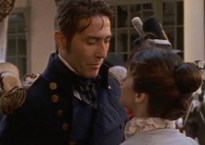
A brief synopsis of the film: earlier in her life, Anne Elliot, one of the daughters of an aristocratic English family, broke off an engagement to one Frederick Wentworth. Miss Elliot was persuaded to do so by those who trouble themselves over such matters as the young seaman’s family connections and class were deemed to come up short. Years later when her father (going through belt-tightening times) rents out the family estate to an Admiral Croft, Frederick re-enters Anne’s existence since his sister is married to that high-ranking officer. Plus, Frederick is now a rich and successful Captain, making him a highly eligible bachelor in the midst of the upper crust. Whom will he marry? One of Anne’s relatives vying for the honor? Or will he and Anne rekindle that old flame, one supposedly as dead as her current prospects?

[spoiler warning: some key elements of the film could be revealed in this review]

Read more »

24
Feb

Same Song, Different Movie: Ready Steady Go by Paul Oakenfold

Film soundtracks represent a convergence in a pair of arts I’ve devoted a lot of time toward — that of movies and music. Film scores on the other hand, which soundtracks are a part of, are the original music written by composers to accompany and enhance a motion picture. Don’t get me wrong. The orchestral, choral, or instrumental pieces utilized as cues by filmmakers can be essential to the overall result. Fairly or unfairly, most viewers often consider those tracks merely as the background music of a movie.

Yet, it is argued that songs aren’t part of a film score. Perhaps, that’s true. But I’d claim otherwise. For me, and others like me, it’s the theme song (think The Big Country, The Magnificent Seven, or The Great Escape as some in the renowned variety), or an existing popular songneedle dropped” into a film that is remembered most (see Oliver Stone’s Wall Street as an example). By the way, that tag (“needle dropped”) represents one of my favorite colloquial terms, like ever. My blogging colleague over at Fog’s Movie Review took note of this a few weeks back in his excellent post:

“… there’s a deep connection between the two arts, and sometimes that winds up creating an inseparable bond between the two in the viewer’s mind.”

Riffing on that somewhat, and concluding the theme I have going this week, I’ll look at a particular song that turns ten years old in 2012. This distinctive tune was used by two different directors/film scorers in a pair of stellar action sequences from a great duo of 00s thrillers — Paul Oakenfold’s Ready Steady Go (not to be confused with a Larc~en~ciel song by the same title, sorry Novroz).

The Bourne Identity (2002)

Written by Paul and Andy Gray, you can tell by listening to the trippy, pulsating dance track why commercials (Saab), games (EA Tiger Woods), TV shows (Las Vegas) made use of it during the decade. No wonder it was selected to underscore a key scene in filmmaker Doug Liman’s updated 2002 adaptation of author Robert Ludlum’s best novel (recommended reading - Claire and Max‘s wonderful look at that trio of films). Give filmmakers credit for utilizing the rhythmic piece to back that film’s car chase sequence, one featuring the iconic Mini, weaving its way through Paris. Given how successful the sequence turned out, director Paul Greenfield would anchor each of his subsequent sequels in that trilogy with pivotal auto chases. Although, I daresay Oakenfold’s original song made this particular sequence more musically memorable.

Collateral (2004)

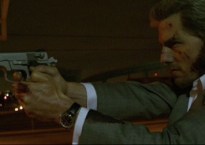
Given that Michael Mann’s 2004 film was spotlighted this week, its stellar Club Fever action sequence had to bat clean-up in this article. While it remains initially the same song, Paul Oakenfold offered up a re-mix of the track to better fit the pivotal scene, this one cleverly staged within a Koreatown, L.A. dance club. If the above film performed well using the pulsing tune, I think the song was embedded to even better effect within this characteristic Mann action excerpt. Why, you ask? Its new blended vocals were now tighter within the refrain, and certainly its use is tailor-made for such a scene taking place in the midst of a crowded, writhing dance floor. Plus, Ready Steady Go’s pounding tempo really powers Vincent’s (Tom Cruise) deftly choreographed assassination of the final witness. Simply, it’s the filmmaker at his very best using pitch-perfect music to augment film to an extraordinary end result.

Note: there is one other instance that utilized this same song for a sequence, Stormbreaker, but since I’ve never seen it, I didn’t include that film here.

23
Feb

TMT: “Ah, I got lucky with the lights.”

This is the next entry in a Theatre… a Movie… and a Time series that was begun here. In staying with the unexpected film theme I find myself in this week, I offer up another related post for a certain 2004 Michael Mann work.

“Did you join Amnesty International, Oxfam, Save the Whales, Greenpeace, or something? No. I off one fat Angelino and you throw a hissy fit.”


Theatre

AMC Rolling Hills 20


Movie

Time

August 8, 2004: some years ago, my long-time friend and work colleague suggested we getaway after a round of golf to see a movie together, one our wives had no interest whatsoever in watching. We’ve routinely repeated this practice to this very day, at least once a summer. As stated, this implementation of a ‘guys gone golf & movie-going’ includes cinema fare our spouses, in unison, customarily respond to when invited:

“No, you go.”

Not surprisingly, these have included loud, explosion-filled summer blockbusters, R-rated comedies and horror film, or gun-toting thrillers of all sorts. What can I say but, “¿Quien es mas macho?”

Director Michael Mann’s return to the urban crime genre in the decade of 00s with the stellar Collateral, itself another work of his laid out across the L.A. sprawl the two of us know only too well, turned out to be one of those films. For the sole reason that we played the links in the South Bay area of Los Angeles on that particular Sunday, we struck out to the nearby AMC Rolling Hills 20 cineplex. Turned out to be the first of only two times I ever visited this cineplex. It’s become a standard for the utilitarian stadium seat movie theaters in that part of town. More’s the pity.

However, the film was exactly to our Y-chromosome expectations. And each year since, we’ve only sought to find similar experiences. I think our wives coin it as “testosterone poisoning“. Go figure.

The entire TMT series can be found here.

22
Feb

The Best Picture Project: The Godfather (1972)

In honor of The Academy Awards this Sunday, my dear friend Ruth over a Flixchatter is doing a mini-blog-a-thon for the occasion. In looking at Best Pictures by decade, she generously offered me a shot at contributing one for a particularly turbulent ten-year period. Without hesitation, I choose the film that’ll reach its 40th anniversary this year, one memorable enough that it christened another series of mine, already. It is a motion picture that was distinctly of the 70s, endures without a trace of wistfulness even decades later, and yet still casts a long shadow.


If anything is certain in this year or the next, the Academy of Motion Picture Arts and Sciences will invariably get something wrong. They’ve awarded the Oscar to a picture, actor/actress, or [insert writer, producer, etc.] that have a) jaw-dropped the audience (there and on television), the media, and certainly the nominees, immediately, or, b) after thoughtful rumination years later, everybody and their grandmother saw it for what it was. A mistake. To keep it manageable, we won’t even go into those Oscar snubbed. It’s why discerning blog articles by colleagues like these abound at this time of year:

At least that didn’t happen for the Best Picture category during the first half of the 1970s — I always point out the Rocky and Kramer vs. Kramer picks occurred during the latter portion of that decade. Besides, I’ll argue till I’m blue in the face that the most worthy of them in this distinguishable stretch landed the same year I graduated high school in ’72, The Godfather.

Looking back, it was quite the task handed the young Francis Ford Coppola by Paramount Pictures in directing such a project (he was almost replaced by Elia Kazan by studio heads part way through). I mean the 1969 novel by Mario Puzo represented one of the most popular page-turners of the 60s. It introduced a whole new lexicon to crime writing, in actuality, after its arrival. And that blockbuster of a book could have gone oh so wrong in its film adaptation. Yet, the film that came from it did not pale — far from it, in fact.

Like the novel, the work is more of an experience than simple movie viewing by those who caught it. The Godfather remains a rich, textured depiction of crime family life, one where the family remains the central, operative word. Even though the film can be shockingly violent, its tale never loses the audience because it embodied a special collection; ethnic gangsters existing in a country made of immigrants, and in a way not seen before in movies. We develop a stake with those criminals byway of ancestry, their familiar roots as newcomers, and their dark efforts to better a group held together by blood or marriage.

Furthermore, the 70s, given the times and the dissolution so prevalent in the era, were very much the home of the anti-hero. This was another key reason the film registered so completely with audiences. Michael Corleone’s journey as an outsider (even within his clan), to intuitive insider and ultimately head of an organized crime dynasty is the core of the story. Even if you look upon the family as corrupt and brutally vengeful, you still relate with the character as he prevailed against the adversity surrounding him. His actions, though awful, remained noble in a way that only sought to help those he loved.

Together with a cast for the ages (Marlon Brando, Al Pacino, Robert Duvall, James Caan, Diane Keaton, Sterling Hayden, Talia Shire, Richard Castellano, Abe Vigoda, John Casale and more), nothing came close to matching this repertoire of actors hitting their marks. The Godfather persisted in being a drama that reached almost epic proportions in the years that cross its lens, many representing some real crime history of this country. It managed its Best Picture feat against a good stock of candidates, too. As  noted a few years back it won out:

“… over the decadent, dark Cabaret; the worst canoe trip ever in Deliverance; Depression-era drama Sounder; and coming-to-America drama The Emigrants.”

Everything worked for it. A compelling story adapted extraordinary well by the author and the young director in charge and breaking through, film editing, a memorable musical score, and cast performances that were second to none in this or any other year. Of course, The Academy being who they are, missteps were bound to happen and immune this film was not. Its noted cinematographer, Gordon Willis, was not even nominated for his splendid work on the picture, and one of the all-time great (read infamous) Oscar mistakes occurred when Coppola lost the Best Director award to Cabaret‘s Bob Fosse that year (and this comes from a diehard Fosse fan, mind you).

This modern classic would go on to spawn what many argue to be the best sequel ever in The Godfather Part II, two years later. It’s a remnant few in cinema can lay claim upon, let alone Oscar winners. I cannot give a number to the articles, opinions, or comments I’ve read through the years that state the 1974 Best Picture was as good as, or even exceeded, the original film. It’s a valid assertion (and Coppola, again at the helm, would finally pick up the Director’s Oscar for something more than worthy and way beyond the dreaded ‘make up’ call). The follow-up successfully used material not adapted from the novel and additional story supplied by the author to great effect. Yet, I’d counter that ‘better’ contention with this. Part II succeeds because it is a sequel. It builds beautifully upon a foundation already laid out by The Godfather. Without it, the continuation doesn’t exist. Only the renowned 1972 film can stand alone. It is why that distinct pair of films continues to be the best one-two punch ever for a decade in motion pictures, and one known for its share of haymakers.

20
Feb

Mann’s Night of “Fates Intertwined”: Collateral Film Review

When a master of any particular genre returns to it, it’s usually to the satisfaction of the fans of that maestro or the genre. Thankfully, such was the case with the 2004 film, Collateral. With director Michael Mann returning to Los Angeles with another crime thriller, using a fine script by writer Stuart Beattie, it’s the fans of both the director and that category of film that reaped the benefits. As well, Mann-aficionados will appreciate him coming back to this familiar tuft without attempting what is now the movie studios’ brain dead pastime of re-making successful original work. Luckily, this was not a regurgitation of his great 1995 ensemble crime saga, Heat.

Collateral brings a more intimate, confrontational drama to bear, played out across the nocturnal expanse of the ethnically diverse L.A. landscape. Whereas Heat had two groups, nonpareil criminals and an elite police group, directly facing off, here law enforcement is on the sidelines, always a step behind and waiting to pick up the pieces of this two-man conflict. Even when one sharp LAPD street detective starts puzzling it together, the director unleashed an unanticipated volte-face that quickly told the audience he was not about to repeat himself. Read more »

Follow

Get every new post delivered to your Inbox.

Join 810 other followers